Our Mission
Silk Road Cultural Center is a Chicago-based interdisciplinary arts organization rooted in the modern communities of the historic Silk Roads, including our diaspora communities. We embrace the arts as a catalyst for connecting people, places, histories, and futures.
Our Vision
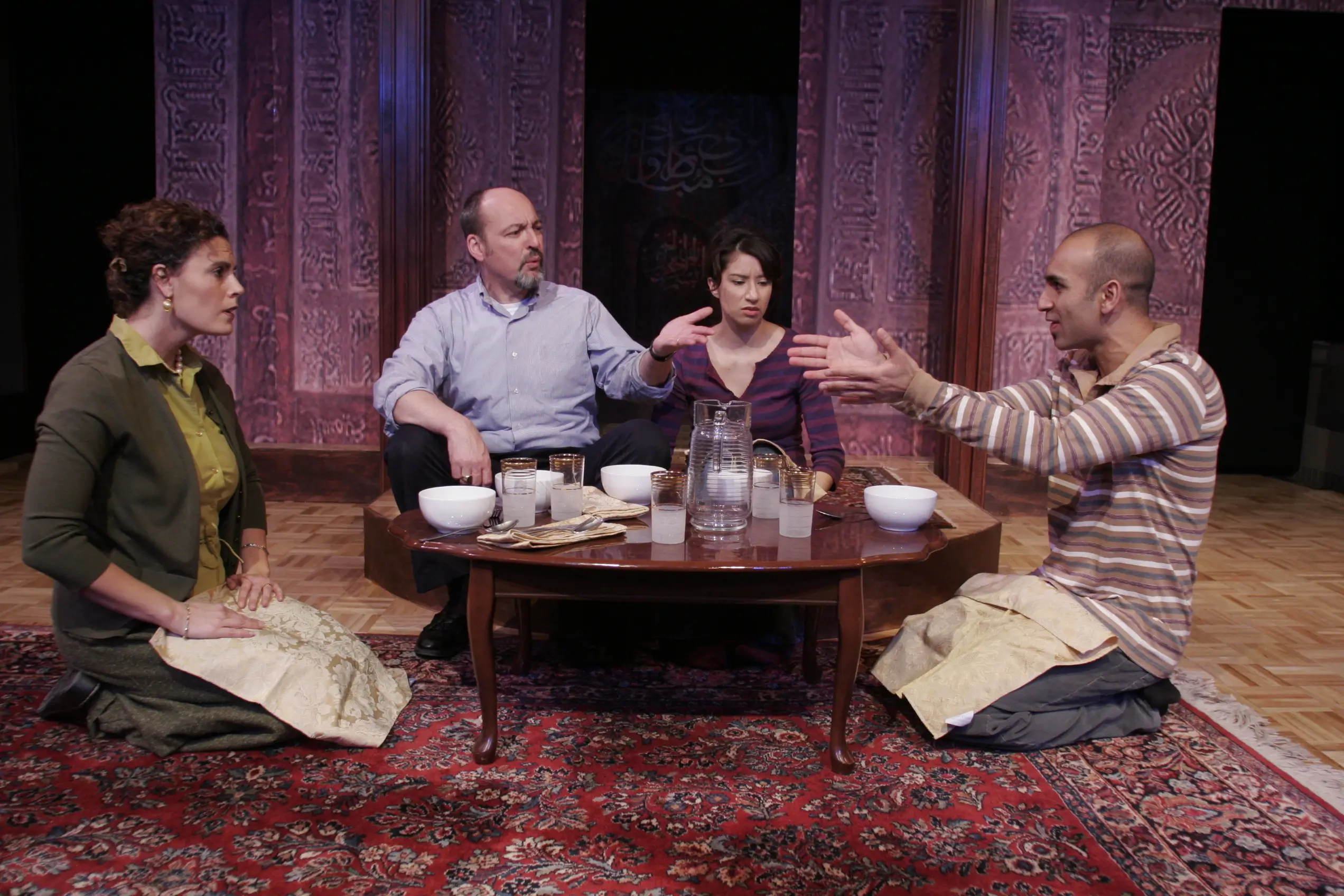
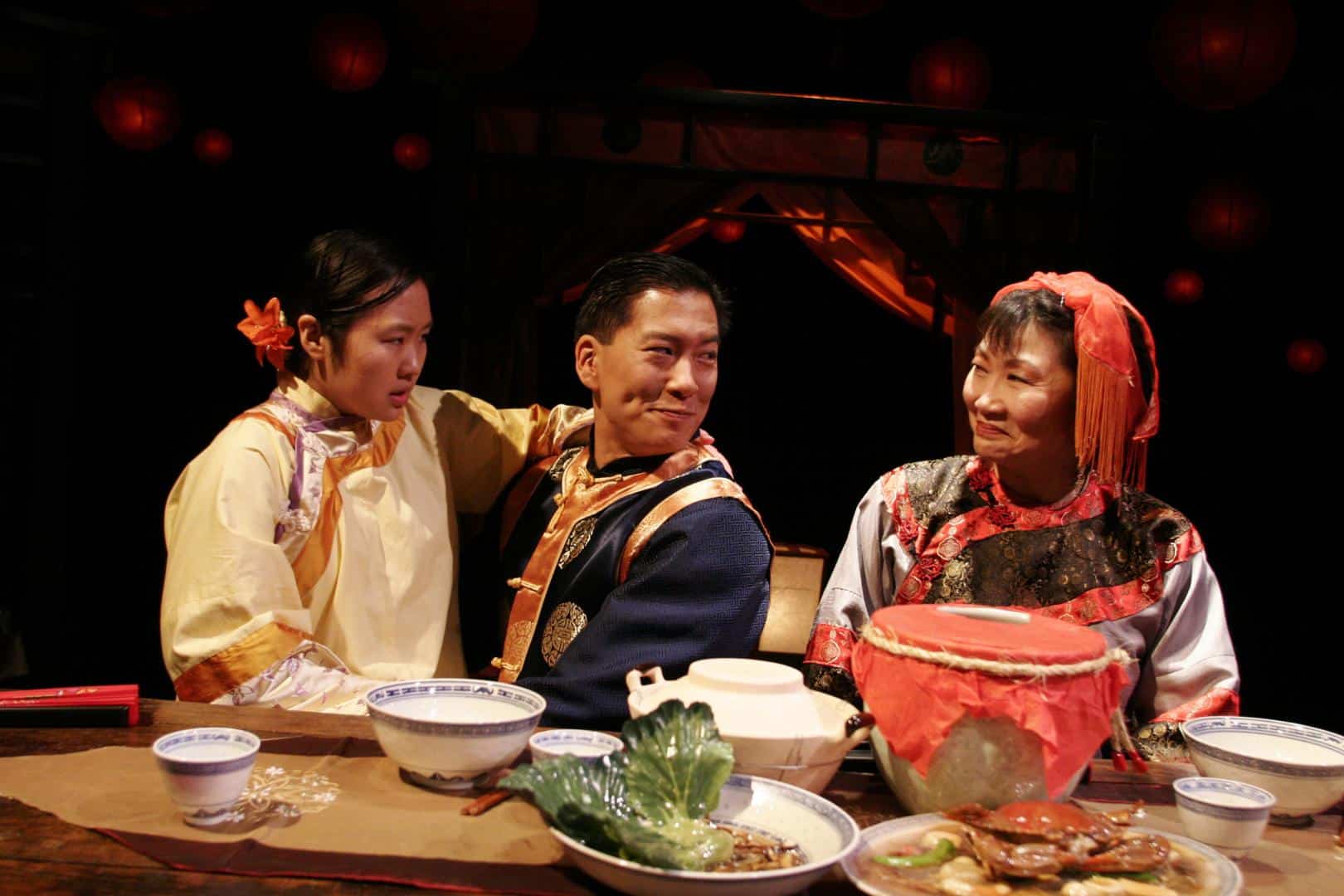
At Silk Road Cultural Center we know that representation matters; it shapes perceptions, informs conversations, and influences policies. In our increasingly diverse American society, we view representation as key to having a “seat at the table.”
Understanding that cultures are inherently linked and not ranked, our artwork explores the intersections of cultures without undermining the specificities of cultures. In striving for a society that values art over ideology and inquiry over dogma, we welcome the complexities and contradictions of our human experiences.
We embrace storytelling in many forms including theatre, film, digital media, music, dance, literature, visual art, and food. At Silk Road Cultural Center, art is both a crossroads and a destination; a sanctuary for healing ourselves, healing our communities, and healing our world.

Our Board, Staff, & Company
Founders
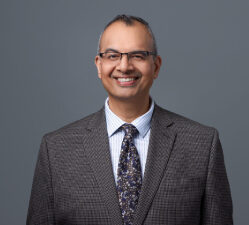
Malik Gillani

Jamil Khoury
Board of Directors
Amynah Ali
Mohamed Atef
Catherine Dionne
Malik Gillani
Rummana Hussain
Samer Kanaan
Priya Khatkhate
Jamil Khoury
Ryan LaHurd
Nirav Shah
Staff & Company
Gordon Chow
Katy Firth
David Henry Hwang
Beverly Kirks
Tasneem Mandviwala
Nawar Nemeh
Darrel Reese
Elizabeth Rosner
Andrew Skwish
Sophia Walker
Artistic Associates
Anna Bahow
David Henry Hwang
Sami Ismat
Fouad Teymour
Founded by husbands Malik Gillani and Jamil Khoury, Silk Road Theatre Project began as an intentional and creative response to the terrorist attacks of September 11, 2001. Malik and Jamil recognized that the consequences of that catastrophic day would reverberate for years to come, posing unique and urgent challenges for Asian, Middle Eastern, and North African communities. This dangerous backlash, and its current-day manifestations, underscore our commitment to educating, promoting dialogue, and healing rifts via the transformative power of storytelling.
Harnessing that power, we set out to challenge the ideology and hatred that fueled the 9/11 attacks and the anti-Arab and anti-Muslim violence that immediately followed. Our vision was to counter negative images of our communities with theatrical representation grounded in authentic and multi-faceted human experiences. We centered politics that were anti-racist, anti-colonial, and pro-feminist, and elected to tell stories that were by us, about us, and for all.
Our focus quickly expanded beyond West Asia and North Africa to encompass the vast territory known historically as the Silk Road, a network of trade routes stretching from China to Syria and beyond. The legacy of the Silk Road provided us with a narrative from which our core values would appear: Discovery, Empathy, and Pluralism.
In 2011, we changed our name from Silk Road Theatre Project to Silk Road Rising, to better reflect the company we were becoming. The aspirational new name would bridge our live and digital artmaking, with lifelong learning, and cultural activism, enabling us to serve our mission through a more integrative and holistic approach.
The transition to Silk Road Cultural Center in 2024 allowed us to reimagine our programming within a multidisciplinary and interdisciplinary arts framework. A curatorial approach to connecting creative mediums provides artists of Silk Road backgrounds an expansive landscape from which to broaden the American story and honor the historic Silk Road.
From Silk Road Theatre Project (2002) to Silk Road Rising (2011) to Silk Road Cultural Center (2024), our Silk Road journey continues to inspire.
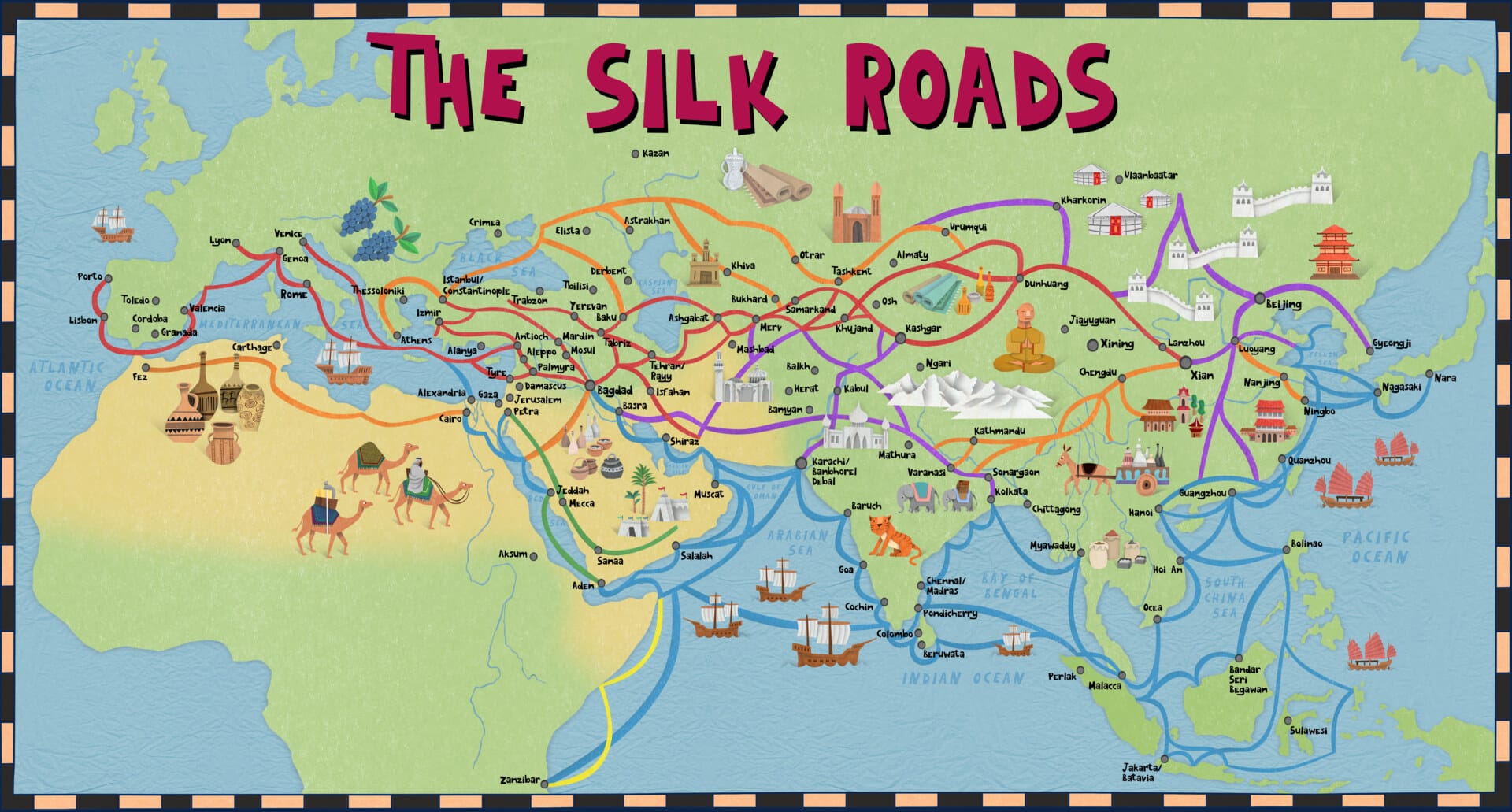
“The Silk Roads” refer to the great land and maritime trade routes that originated in China and stretched throughout Asia, and into North and East Africa, and Mediterranean Europe.
From the 2nd century B.C.E. until the 15th century C.E. the world’s dominant land routes adjoined China to Syria and connected with sea routes creating an East-West corridor linking Japan with Italy. These transcontinental caravans resulted not only in trade, of which silk was an important commodity, but also in tremendous cultural interchange among the peoples of the regions; interactions that fostered the sharing of ideas and the fusion of art and aesthetics.
The Silk Roads spawned rich traditions of storytelling, primarily oral narrative and epic poetry. As we ourselves are storytellers, we understand the Silk Roads as both a geographic polestar and a guiding metaphor for our polycultural worldview.
If we were to trace on a contemporary map the numerous trade routes connected to the historic Silk Roads, the modern nation-states of this vast territory would comprise some two-thirds of the world’s population.
From a political perspective, the Silk Roads represent a model of interdependence and connectivity that united diverse peoples across geographically contiguous regions. This history is particularly important to us because it pre-dates the advent of European imperialism and colonialism, with its devastating strategies of conquer, divide, rule, and exploit.
We embrace the Silk Roads as a living heritage and a model of the anti-colonial and anti-Orientalist politics that define our company’s artmaking and advocacy. May this beautiful legacy continue to thrive and evolve at Silk Road Cultural Center.
Chicago: Capital of the North American Silk Road
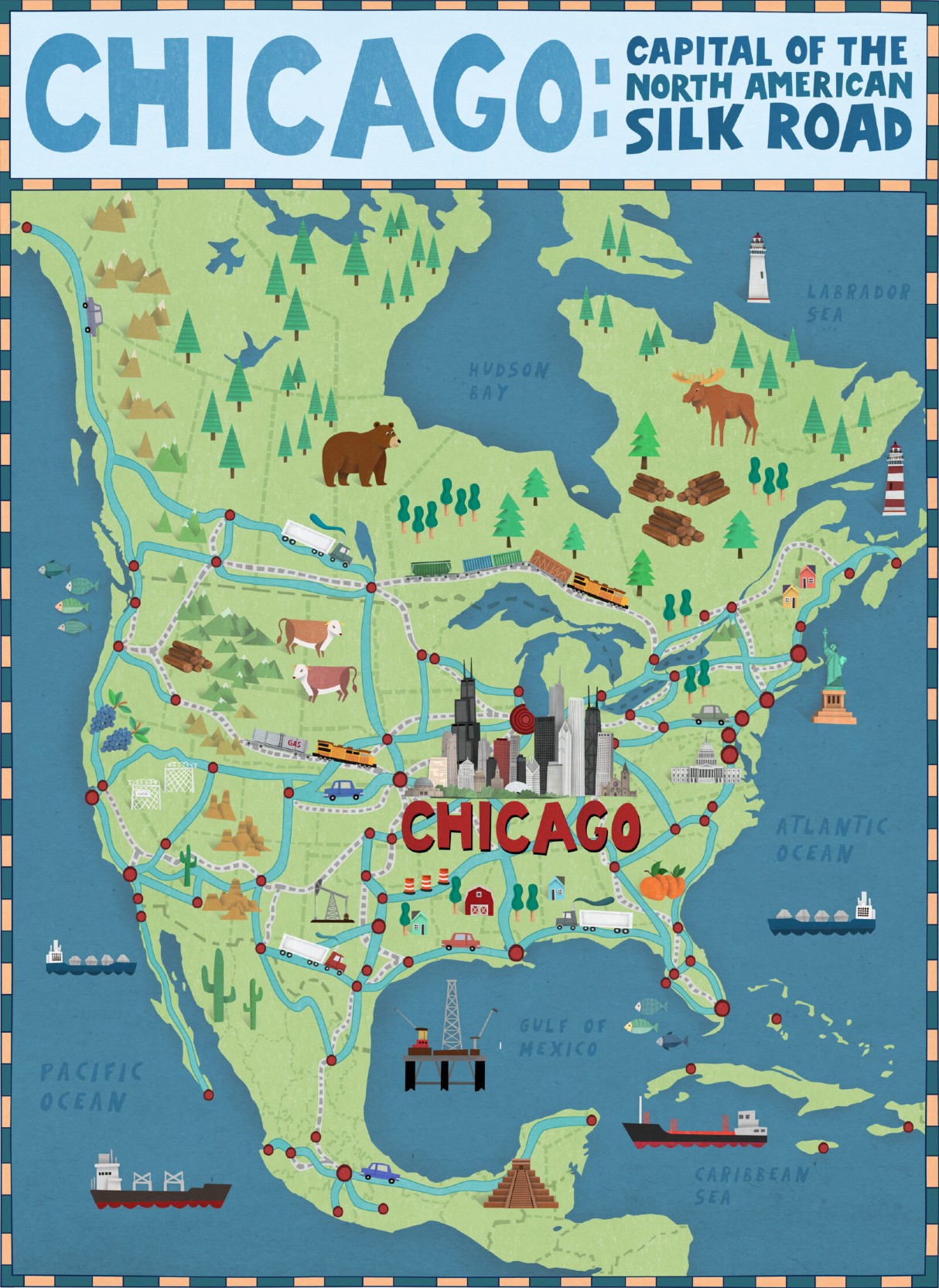
As a crossroads in North America’s vast cultural and commercial matrix, Chicago represents a modern-day Silk Road capital. The city’s elaborate grid of railways, lake and river waterways, major highways, and well-connected airports echo the historic Silk Road’s role in powering movement. Beyond being a conduit for commerce, Chicago stands as a hub of creative and intellectual dynamo. Its vibrant arts, education, and hospitality sectors make it a crucible for exchanging ideas and innovation, mirroring the Silk Road’s legacy as a thoroughfare of knowledge that connected Asia, Africa, and Europe.
In a similar vein, the internet represents today’s global Silk Road, a technological freeway of ideas, stories, information, and beliefs.
Featured Visual Artist
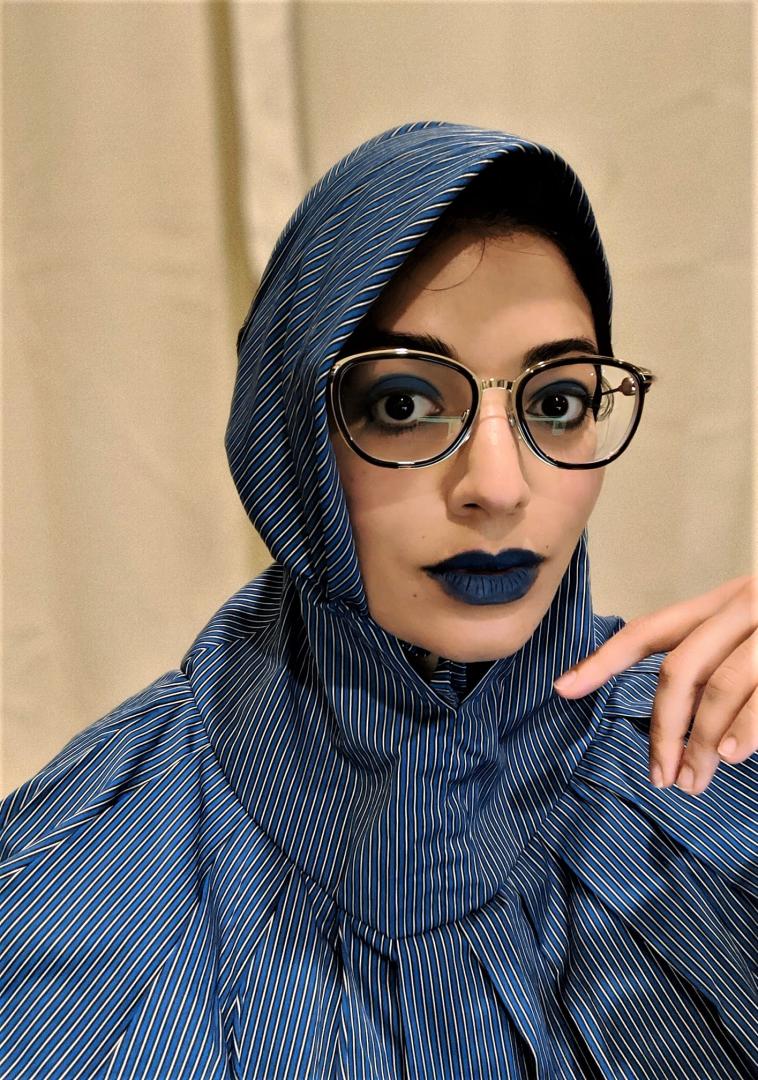
Tasneem Mandviwala
Tasneem Mandviwala’s paintings interrogate the imagined but meaningful boundaries constructed through human cultures, spaces, and truths, inviting the viewer to question the solidity of such delineations. She has most recently embraced abstract landscapes and cityscapes as vehicles for highlighting the fluid interplay between “human” and “nature” and how one is actually a part of the other. Tasneem works in acrylic.
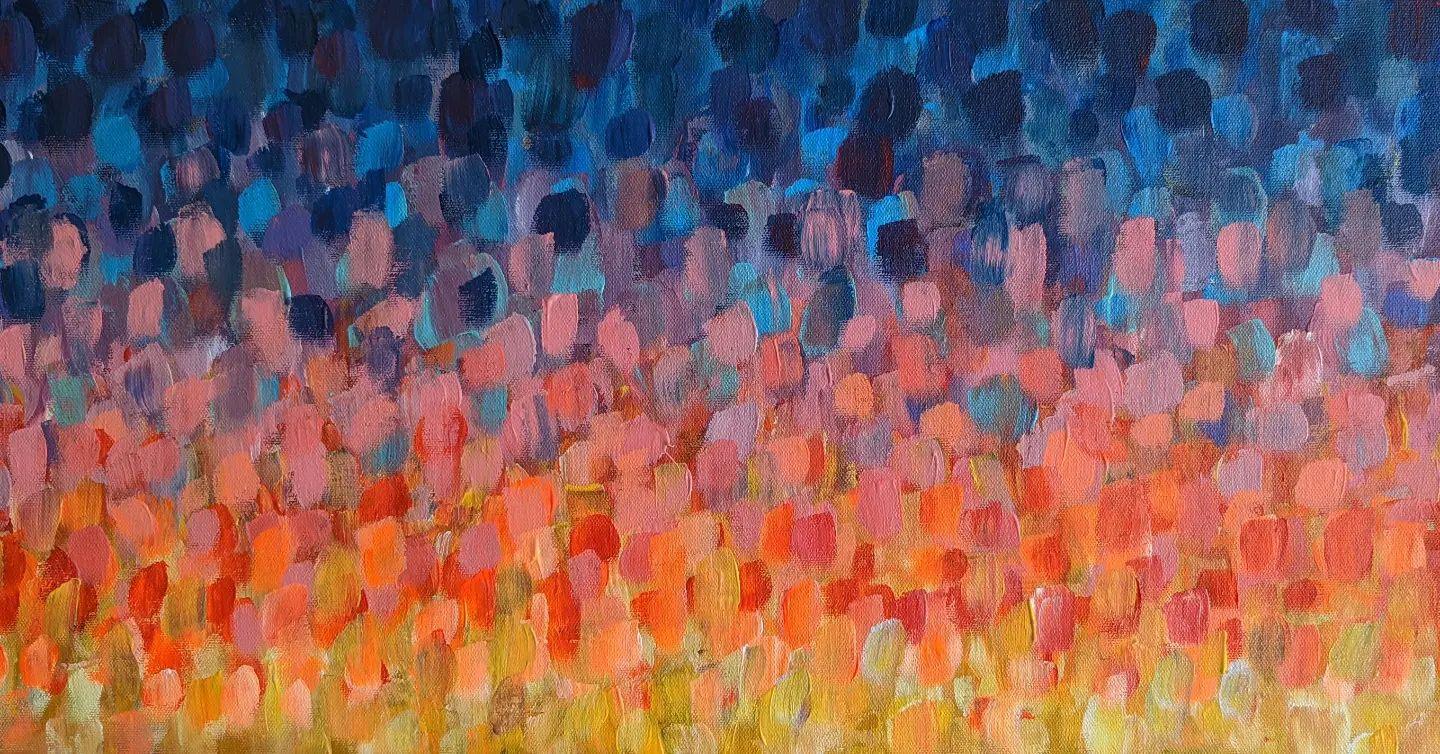
Tasneem Mandviwala
The Sun Sets the Same on Everyone (2022)
Acrylic on canvas; 12" x 24"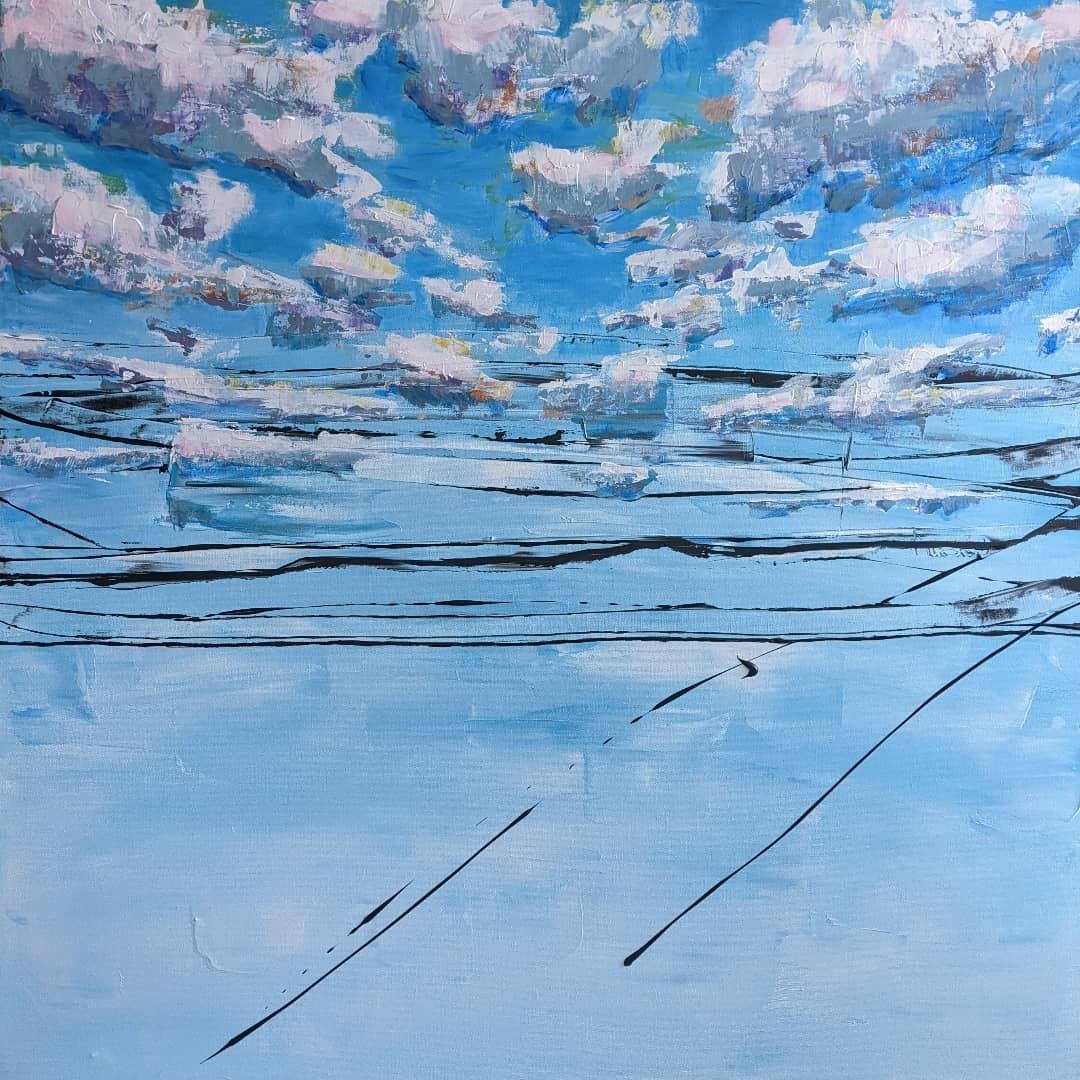
Tasneem Mandviwala
Power (2022)
Acrylic on canvas; 36" x 36"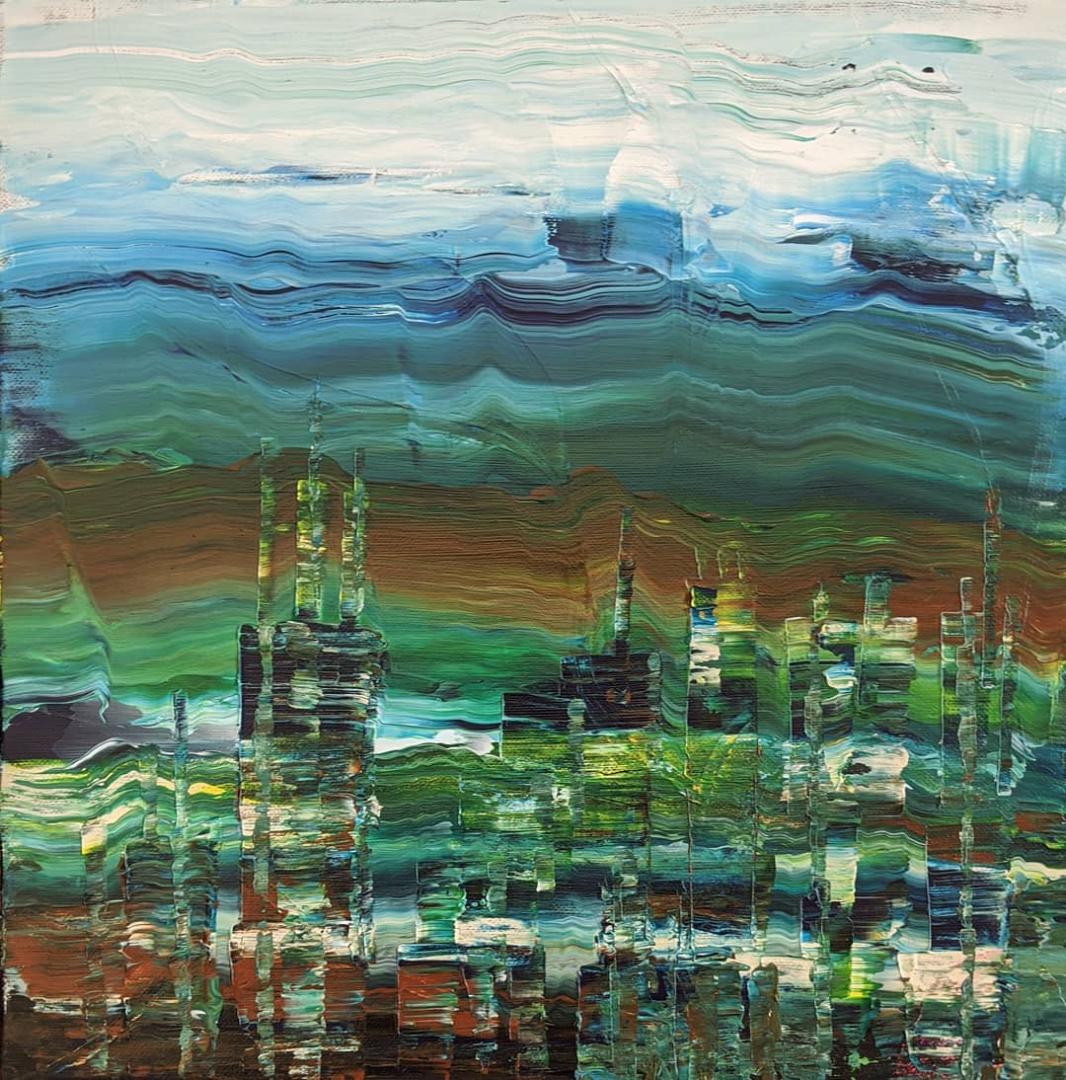
Tasneem Mandviwala
[Earth vs. City] vs. Earth City (2020)
Acrylic on canvas; 14" x 14"The Sun Sets the Same on Everyone (2022)
Tasneem Mandviwala
Acrylic on canvas; 12" x 24"

Power (2022)
Tasneem Mandviwala
Acrylic on canvas; 36" x 36"

[Earth vs. City] vs. Earth City (2020)
Tasneem Mandviwala
Acrylic on canvas; 14" x 14"